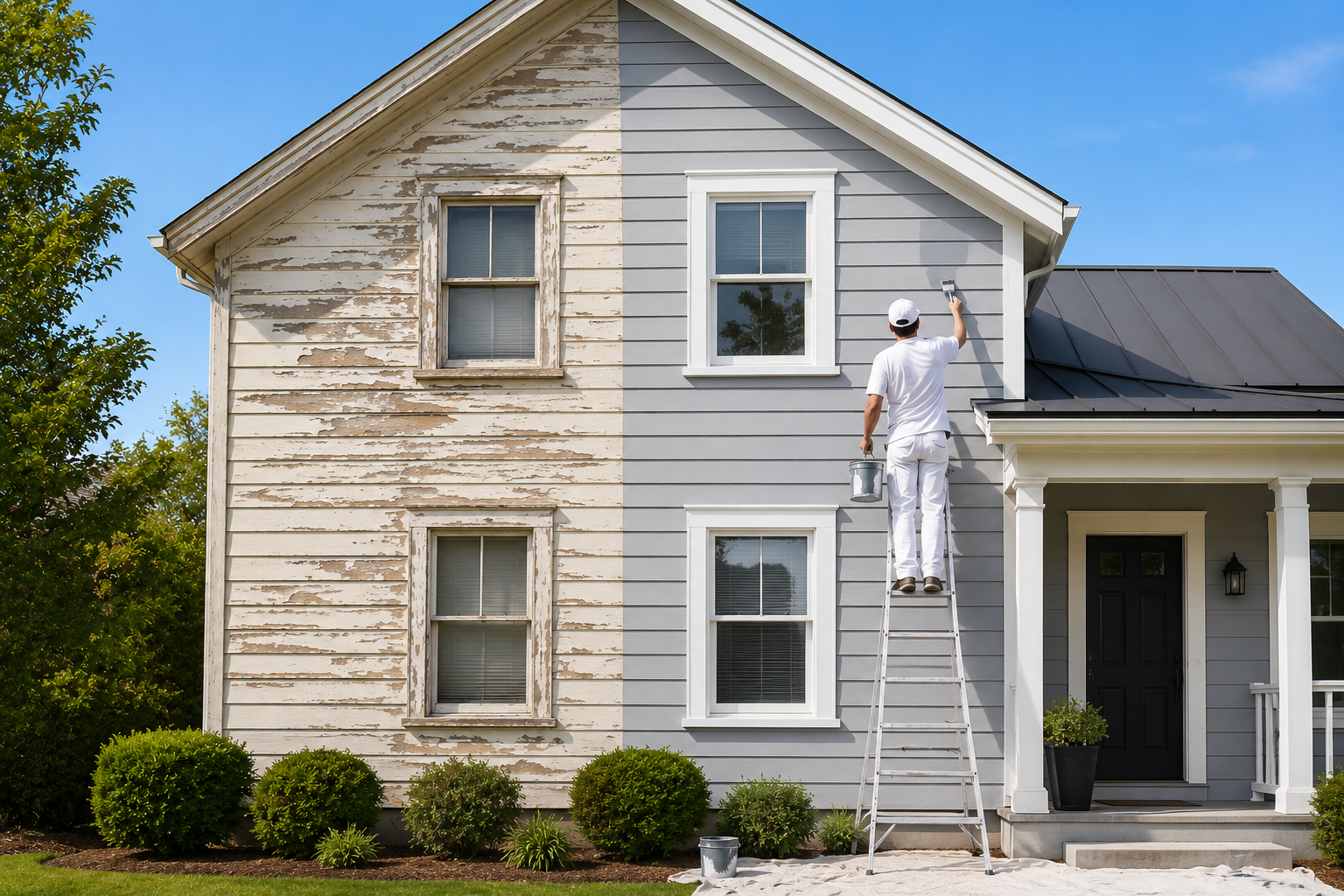
Painting is one of the simplest ways to maintain and improve your property. Fresh paint helps protect surfaces, increases curb appeal, and can even boost property value.
Regular painting can:
Ignoring ageing paint can lead to larger maintenance problems over time.
One of the First Signs of Ageing Paint
If your walls or exterior surfaces no longer look as vibrant as they once did, fading paint may be the cause.
Sunlight, weather conditions, and everyday exposure can gradually break down paint pigments. This is especially common on exterior walls that receive direct sunlight throughout the day.
Faded paint can make your home look tired and neglected, even if the property is otherwise well maintained.
Why It Matters
Fading is often an early warning sign that the paint is beginning to lose its protective properties.
A fresh coat of paint can restore colour, improve appearance, and provide renewed protection.
Paint Should Not Be Coming Off the Surface
One of the clearest signs your home needs repainting is when paint starts cracking, peeling, or flaking away.
This usually happens because of:
Once paint begins peeling, the underlying surface becomes exposed to the elements.
Why It Matters
Peeling paint can allow moisture to penetrate timber, plaster, or other materials, potentially leading to costly repairs.
Addressing the issue early can prevent further damage and restore protection.
What Causes Paint Bubbles?
Paint bubbles or blisters occur when moisture becomes trapped beneath the paint surface.
Common causes include:
Bubbles may start small but can quickly spread across walls or exterior surfaces.
Why It Matters
Blistering paint often indicates an underlying moisture problem that should be addressed before repainting.
Walls That No Longer Clean Easily
Over time, walls can accumulate stains, scuff marks, grease, and general wear.
If cleaning no longer improves the appearance of your walls, it may be time for fresh paint.
This is particularly common in:
Why It Matters
A fresh coat of paint can instantly brighten a room and make your home feel cleaner and more welcoming.
Decks, Fences, and Exterior Woodwork
Timber surfaces require regular maintenance to stay protected.
Signs that timber areas need repainting or staining include:
Decks and fences are especially vulnerable to Tasmania's changing weather conditions.
Why It Matters
Maintaining painted timber helps prevent moisture damage, rot, and premature ageing.
More Than Just an Appearance Issue
Mould and mildew can sometimes appear on painted surfaces, especially in damp areas.
Common locations include:
Why It Matters
Mould not only affects appearance but may also indicate moisture issues that need attention.
Using suitable paints and proper preparation can help reduce future growth.
Sometimes Appearance Alone Is Enough
Design trends change over time. Colours that were popular years ago may now make your home feel dated.
A fresh coat of paint is one of the easiest ways to modernise your property without undertaking major renovations.
Popular updates include:
Why It Matters
Updated colours can make your home feel brighter, larger, and more inviting.
First Impressions Matter
If you're thinking about selling your property, painting can be one of the best investments you make.
Fresh paint helps:
Many buyers notice paint condition immediately when viewing a property.
Why It Matters
A relatively small investment in painting can help make your home stand out in a competitive market.
While every property is different, general guidelines include:
Interior Painting
Exterior Painting
Deck Painting and Staining
Fence Painting
Regular inspections can help determine the right timing for your property.
While some painting projects may seem simple, professional painters ensure:
Professional painting often delivers better durability and appearance compared to DIY solutions.
Your home's paint is constantly working to protect and enhance your property. When signs such as fading, peeling, bubbling, stains, or weather damage begin to appear, it may be time to consider repainting.
Addressing these issues early helps maintain your home's appearance, protect surfaces from damage, and preserve property value. Whether it's refreshing interior walls, restoring exterior surfaces, or protecting decks and fences, a fresh coat of paint can make a significant difference.
By recognising these signs and taking action when needed, you can keep your home looking its best for many years to come.

Ready to experience expert painting services in Tasmania? Contact us today for a free consultation and let us bring your vision to life with precision and care.